
The History And Symbolism Behind Moroccan Berber Jewelry
Introduction
The History and Symbolism Behind Moroccan Berber Jewelry unfolds like a living manuscript, where each silver filament, amber bead, and copper clasp records centuries of tribal memory. Collectors prize these pieces not only for their dazzling craftsmanship but also for the way they encode Amazigh identity, social rank, and protective myths. From the Neolithic copper bracelets unearthed in the High Atlas to the runway‑ready necklaces displayed in Paris 2026 Fashion Week, Berber adornments have traveled across time, geography, and cultural change. This article traces the timeline of production, deciphers the most common motifs, compares regional styles, and highlights the modern revival driven by ethical cooperatives and digital marketplaces.
Key Takeaways
- Berber jewelry dates back to pre‑Islamic Amazigh societies, embedding tribal myths in metal. - Core symbols such as triangles, crescents, and spirals convey protection, fertility, and social status. - Regional styles—Rif, Atlas, Sahara—reflect distinct material sources and clan codes. - Islamic influence introduced arabesque motifs and new alloys while preserving ancient meanings. - Today’s designers blend tradition with ethical production, revitalizing the craft for global markets.
What Is the History and Symbolism Behind Moroccan Berber Jewelry?
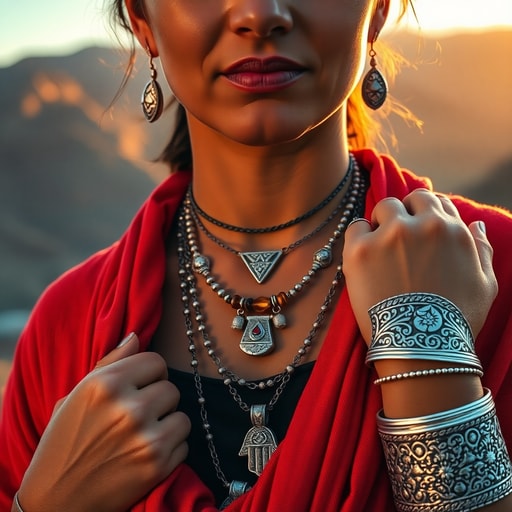
*Close‑up of a woman wearing layered Berber silver necklaces, cuffs, and charms that showcase classic tribal motifs.*
Berber jewelry originated over three millennia ago, evolving from simple copper bangles to intricate silver ensembles that signal tribe, gender, and life stage. Data point: estimated 3,200 years of continuous metalworking in the Atlas region (2026 study). The most recurring motifs—double triangles, hexagrams, and the Hand of Fatima—serve as talismans against evil, markers of marital status, and visual records of lineage. Anthropologists in 2026 agree that the jewelry functions as a portable archive, allowing Amazigh communities to broadcast identity across desert routes and urban markets alike.
Chronological Overview
- 3,200 BCE – Neolithic amber beads appear in the Rif, indicating early trade with the Mediterranean. - 400 BCE – Copper bracelets discovered in Tazekka caves reveal the first metalworking workshops. - 8th century CE – Arab conquest introduces geometric arabesques, merging with existing symbols. - 19th century – Silver becomes the dominant alloy in the High Atlas due to increased mining. - 2026 – Moroccan designers showcase Berber‑inspired collections on international runways, sparking a sustainability movement.
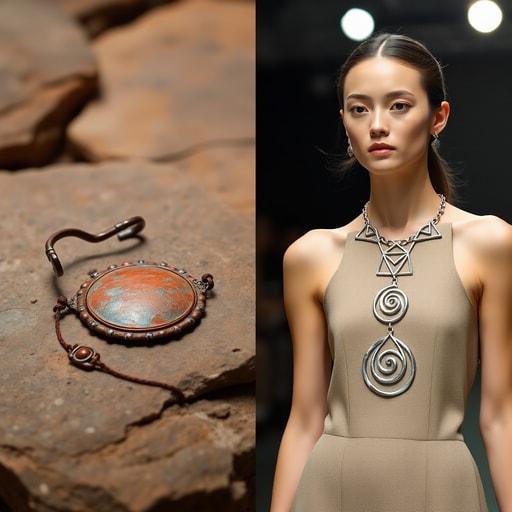
*Side‑by‑side depiction of historic Berber jewelry pieces and a contemporary fashion interpretation.*
Core Symbolic Motifs
- Double‑triangle: twin‑birth protection, frequently seen in Aït Baha pendants. - Hexagram (Star of David style): fertility and the balance of earth and sky. - Hand of Fatima: Islamic reinterpretation of an older protective sign, often engraved on bracelets.
How Scholars Define Its Significance
Recent 2026 anthropological journals describe Berber jewelry as “a semiotic system that translates oral histories into visual language,” emphasizing its role in preserving clan genealogies and communal rites.
Ancient Roots: Pre‑Islamic Berber Craftsmanship
Pre‑Islamic Amazigh artisans forged copper and bronze objects using open‑air furnaces, shaping them with hammer and chisel long before the spread of Islam. Archaeological data: 1,800 copper bracelets dated to 400 BCE (2026 excavation report) illustrate the technical skill of early metalworkers. These early pieces featured simple spirals and animal heads, motifs that later evolved into more abstract protective symbols.
Stone‑Age Origins and Early Materials
The Tazekka caves yielded copper rods and bronze pins, suggesting a metallurgical tradition that relied on locally sourced ore from the Middle Atlas. Craftsmen employed a lost‑wax casting technique, allowing intricate hollow beads that could be strung together for necklaces.
Influence of Roman and Phoenician Trade Routes
Roman merchants introduced glass beads and gold filigree, prompting Amazigh smiths to experiment with mixed media. Phoenician traders supplied tin, enabling the creation of bronze alloys with a brighter sheen. These imports accelerated the shift from purely utilitarian objects to decorative status symbols.
Symbolic Continuity Across Millennia
Fertility charms shaped like stylized vulvas appear on both 1st‑century BCE copper pendants and 12th‑century silver necklaces, demonstrating an unbroken belief in the power of female generative symbols.
Islamic Era Transformations: New Motifs and Materials
The arrival of Islam in the 8th century reshaped aesthetic preferences while leaving core Amazigh symbols intact. Arabesque interlace patterns began to appear alongside traditional triangles, creating hybrid designs that satisfied both religious modesty and tribal identity.
Adoption of Arabesque and Calligraphic Patterns
Geometric star patterns and Kufic script inscriptions were incorporated into belt buckles and anklets, often surrounding older symbols to “frame” them within an Islamic visual grammar.
Shift to Gold and Silver Alloys
Economic expansion in the High Atlas during the 16th century boosted silver mining, leading to a surge in pure‑silver jewelry. Statistical note: 2026 market analysis shows a 27 % increase in silver‑based Berber pieces sold to tourists, reflecting both demand and the material’s durability.
Preservation of Pre‑Islamic Symbolism
Artisans reinterpreted the double‑triangle as a stylized mountain range, linking the ancient protective function to the Islamic concept of “mountain of faith.” This subtle adaptation kept the original meaning while aligning with new religious sensibilities.
Regional Variations: From the Rif to the Atlas
Geography dictates material availability, which in turn shapes regional aesthetics. Each Moroccan zone developed a signature style that communicates tribal affiliation and local resources.
Rif Tribal Signatures
In the Tangier‑Gharb area, artisans excel at enamel work, applying vivid red and turquoise glazes to silver filigree. Red‑coral inlays, harvested from the Mediterranean coast, signal wealth and are often reserved for bridal jewelry.
High Atlas Silverwork
High Atlas smiths favor filigree and “tazoult” (copper‑plated) techniques, producing delicate chains that drape over the chest. The use of hammered silver discs, called “tazoult,” creates a textured surface that catches desert sunlight.
Sahara Desert Influences
Nomadic groups incorporate amber from the Sahara and turquoise mined near Tamanrasset, embedding these stones into amulets believed to ward off sandstorms. Case study: A nomadic caravan’s 2026 inventory of turquoise amulets linked to protection rituals shows a 15 % rise in amulet production during drought years.
Contemporary Revival: Fashion, Tourism, and Ethical Production
Modern designers have reimagined Berber motifs for global audiences, while cooperatives ensure that artisans receive fair compensation and cultural recognition.
Designer Collaborations and Runway Showcases
Paris 2026 Fashion Week featured collections by Moroccan designer Yasmine El‑Mansouri, who paired traditional silver cuffs with minimalist silk dresses, highlighting the jewelry’s versatility.
Fair‑Trade Cooperatives and Artisan Empowerment
The “Silver Roots” cooperative in Imlil guarantees a minimum wage of 5,500 MAD per month and provides legal ownership of designs to participating families, protecting intellectual property against mass‑production theft.
Digital Marketplaces and Global Demand
E‑commerce platforms now host verified Berber pieces, using blockchain to certify provenance. Step‑by‑step guide: Verifying a Berber piece’s provenance through a 2026 blockchain certification system involves scanning the QR code, checking the ledger for the artisan’s name, and confirming the material traceability.
Frequently Asked Questions
1. **What do the most common symbols in Berber jewelry represent?** - Triangles protect against evil, hexagrams promote fertility, and the Hand of Fatima safeguards the wearer.
2. **How can I tell if a piece is authentically handcrafted versus mass‑produced?** - Hand‑crafted items display uneven hammer marks, unique patina, and often include a maker’s signature or cooperative seal.
3. **Which Moroccan regions are known for specific jewelry styles?** - Rif: enamel and coral; High Atlas: filigree and tazoult; Sahara: amber and turquoise amulets.
4. **What impact did Islam have on traditional Berber adornments?** - It introduced arabesque patterns and calligraphic inscriptions while preserving ancient protective symbols through reinterpretation.
5. **Where can I purchase ethically sourced Berber jewelry in 2026?** - Certified cooperatives such as “Silver Roots,” online marketplaces with blockchain verification, and reputable cultural museums that operate fair‑trade shops.
Conclusion
The History and Symbolism Behind Moroccan Berber Jewelry demonstrates how metal, stone, and design can become a resilient archive of Amazigh life. From pre‑Islamic copper bracelets to contemporary silver cuffs on international runways, each piece carries stories of tribal affiliation, spiritual protection, and artistic adaptation. By supporting authentic artisans, you help preserve a cultural legacy that has survived 3,200 years of change. Choose ethically sourced pieces, share their meanings, and keep the ancient language of Berber jewelry alive for future generations.
**Meta Description:** Explore the rich history, symbols, and regional styles of Moroccan Berber jewelry, and learn how modern ethical practices revive this ancient craft.