
How To Choose Authentic Berber Handcrafted Rugs Online
How to Choose Authentic Berber Rugs Online
The resurgence of Moroccan craftsmanship in modern interior design trends for 2026 has brought the timeless allure of Berber rugs to the forefront of Kenzadi handcrafted Moroccan home decor. These pieces, defined by their geometric simplicity and plush texture, offer a warmth that factory-made alternatives simply cannot replicate. However, as demand surges, the digital marketplace has become saturated with mass-produced imitations that mimic the aesthetic without the soul. Navigating this landscape requires a discerning eye, as the difference between a genuine heirloom and a synthetic replica is often hidden in the details. This guide provides a vetted framework for verifying authenticity and ensuring ethical purchasing online. A true Berber rug is not merely decor; it is an investment in a generational art form that carries the spirit of the Atlas Mountains into your home.
How to Choose Authentic Berber Handcrafted Rugs Online: Decoding the Material
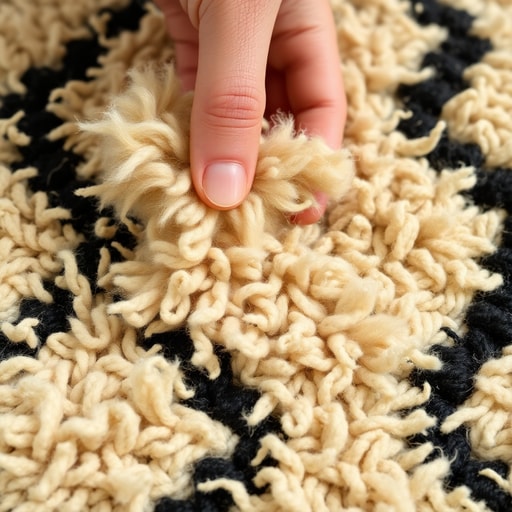
The first step in distinguishing genuine pieces from fakes is understanding the raw materials. Authentic Berber rugs are crafted from "live wool," sheared directly from living sheep, rather than "dead wool" often salvaged from slaughterhouses or used in machine-made replicas. Live wool retains its natural lanolin, a waxy substance that makes the fibers inherently stain-resistant and gives the rug a distinct, earthy scent. This aroma is a hallmark of quality; while it fades over time, its presence upon unboxing is a positive indicator of natural wool Berber rugs.
When browsing listings, examine product descriptions and close-up photos meticulously. You should look for a lustrous sheen and slight texture irregularities in the fibers, which signal natural variance. Conversely, a uniform, dull, or overly plastic-like appearance often suggests the presence of synthetic fibers like acrylic or polyester. These materials compromise durability and authenticity, leading to matting and wear much faster than sustainable Moroccan textiles. Do not hesitate to message the seller specifically asking about the wool source to confirm you are buying a product made from live, hand-carded wool.
Reverse-Engineering Authenticity: Analyzing Knots and Weaving
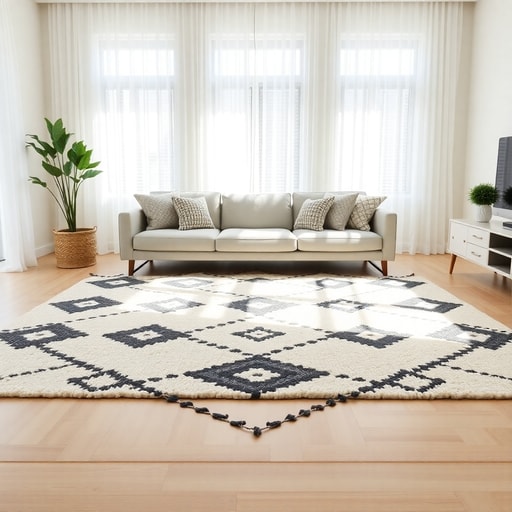
*A wide shot showing an authentic Berber rug as the centerpiece of a stylish, sun-drenched modern living space.*
To act like a forensic investigator when shopping, you must learn to analyze the construction of the rug through zoomable product images. The most telling evidence lies on the backside. Always request or find photos of the rug's reverse; a genuine hand-knotted rug will show the pattern clearly and distinctly on the back, often looking almost like a negative of the front. This is because the weaver knots the yarn around the warp threads, creating a structure that is secure on both sides.
In contrast, machine-made or tufted rugs typically feature a perfectly uniform, mesh-like backing, often made of plastic or canvas, which obscures the design. Hand-knotted vs machine made rugs can be differentiated by the rows of knots: authentic pieces will display slightly uneven, organic rows, while automated manufacturing produces laser-straight lines. You should also pay attention to knot density, measured in knots per square inch (KPI). Authentic Berber rugs typically range from 20 to 100 KPI, depending on the specific tribe and complexity of the design. While Berber rugs are not as dense as Persian styles, a higher KPI generally indicates greater durability and value. Embrace minor imperfections in the weave—these are not flaws but authenticity markers proving human hands crafted the piece rather than industrial assembly lines.
Regional Identification: Knowing Your Tribes
Empowering yourself with knowledge of specific regional characteristics prevents sellers from passing off generic patterns as specific tribal designs. The most renowned style comes from the authentic Beni Ouarain rug of the Middle Atlas Mountains. These rugs are famous for their thick, ivory-colored pile and minimalist black or brown geometric diamond motifs. In contrast, Azilal carpets, originating from the High Atlas, are known for their colorful, abstract designs that often feature vibrant reds, yellows, and blues against a cream or white background, telling a story through their symbology.
You must also learn to distinguish between other types. Boujaad rugs typically feature warm hues of pink, orange, and red with asymmetrical patterns, while Boucherouite rugs are distinct in that they are made from recycled fabrics and scraps rather than wool, resulting in a flatter, more textured weave. Authentic listings should specify the tribe or region of origin, such as the High Atlas or the plains of the Haouz, rather than using vague terms like "Moroccan style" or "Boho chic." As of 2026, specific regional certification tags have become more common among ethical cooperatives, providing further proof of provenance that you should look for in product photos.
*A detailed macro shot emphasizing the tactile quality and texture of genuine live wool used in Berber rugs.*
Vetting the Source: Red Flags in Online Listings
Shifting your focus from the product to the seller is crucial for ethical rug sourcing. You should prioritize vendors who provide "meet the weaver" content or behind-the-scenes videos of the rug-making process. Seeing the hands that tied the knots offers irrefutable proof of authenticity and connects you to the human story behind the item. Be wary of listings that rely solely on stock photography or claim to have identical rugs in multiple quantities. Authentic Berber rugs are one-of-a-kind creations; if a seller has fifty of the "same" rug, it is almost certainly factory-produced.
Check the seller's shipping location carefully. Shipping directly from Morocco or a verified cooperative is often a better sign of authenticity than a dropshipping warehouse located in a different country. Dropshippers often sell mass-produced goods without ever seeing the merchandise. Furthermore, look for detailed return policies that allow for tactile inspection. Photos can sometimes hide synthetic materials or poor construction, so the ability to return the rug if it does not meet your standards upon arrival is essential when you buy Moroccan rugs online.
Understanding 2026 Pricing: The Cost of Time
Contextualizing price as a function of labor time helps you identify deals that are too good to be true. The math of craftsmanship is simple but often overlooked by consumers. A standard 5x7 hand-knotted rug can take anywhere from four to eight weeks to weave, depending on the complexity of the design. This immense time investment justifies a higher price point compared to machine alternatives, which can be manufactured in mere hours by automated looms. Consequently, the price of an authentic rug reflects the human labor involved; a 5x7 foot piece represents over 200 hours of skilled work. As of 2026, market rates for genuine hand-knotted Berber rugs have stabilized to reflect fair trade practices, meaning prices that undercut these standards are a red flag for synthetic materials or exploitative labor. Consider the cost per year of use; a genuine rug can last for generations, while a machine-made alternative typically degrades within three to five years.