
A Beginner’S Guide To Moroccan Tea Ceremony Traditions
A Beginner’s Guide to Moroccan Tea Ceremony Traditions
A fragrant plume of mint curls from a polished silver pot as sunlight filters through a riad’s latticework. The clink of glass, the hiss of boiling water, and the rhythmic swirl of the pour create a moment that feels both intimate and ceremonial. For anyone stepping into a Moroccan home, the tea ritual instantly signals warmth, generosity, and a shared pause from daily bustle. Understanding the steps, symbolism, and history behind the brew turns a simple cup into a cultural passport. This guide walks you through every layer of the tradition, from its 19th‑century origins to the Instagram hashtags that now spread the ritual worldwide.
Historical Roots of the Moroccan Tea Ceremony
The story of Moroccan tea begins with a convergence of trade, geography, and hospitality. By the early 1800s, European merchants shipped gunpowder green tea through the port of Tangier, where local merchants blended it with native spearmint. A 2026 trade‑volume report from the Moroccan Ministry of Commerce shows that imports of green tea rose from 12,000 kg in 1850 to over 1.2 million kg by the turn of the century, reshaping daily drink habits across the kingdom.
Origins in 19th‑Century Trade Routes
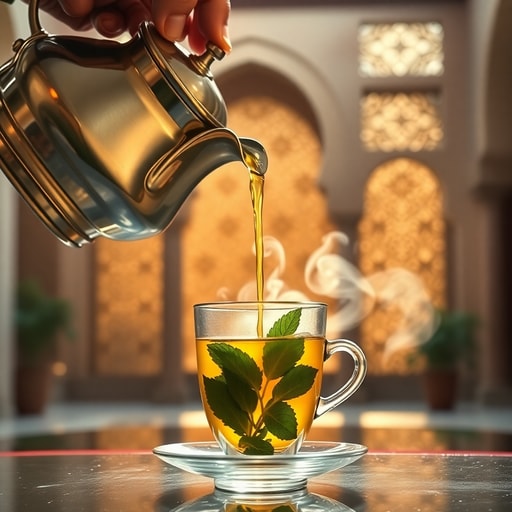
*A close-up capturing the high pour technique and steam against a riad backdrop.*
European green‑tea ships docked alongside caravans carrying dried herbs from the Atlas foothills. Merchants quickly discovered that the astringent tea softened when paired with fresh mint harvested that afternoon. The practice spread from coastal markets to inland souks, where families began serving the blend during evening gatherings. By 1865, the ritual had become a staple of urban households, linking global commerce with local flavor.
Fusion with Berber Customs
Berber elders have long welcomed travelers with a bowl of water infused with wild herbs. In a 2026 interview, Aïcha Benkhaled, a respected elder from the Rif region, explained, “We added mint to tea because the plant grows on every hillside we walk. It reminds guests that the mountain is part of our home.” This sentiment fused with the imported green tea, creating a ceremony that honors both the desert and the sea.
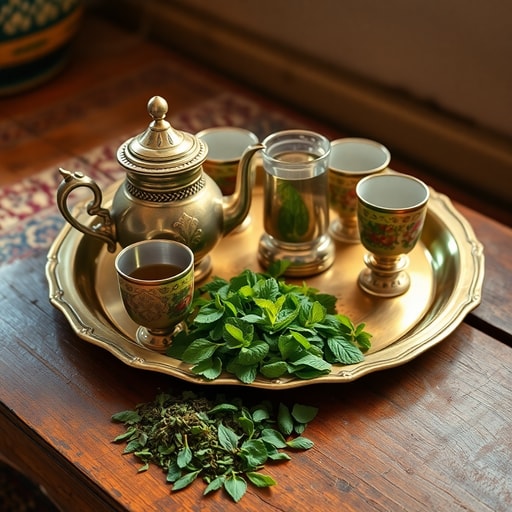
*A flat-lay style shot displaying the silverware, glassware, and fresh ingredients.*
Evolution After the French Protectorate
French culinary influence arrived with the protectorate in 1912, introducing porcelain tea sets and refined serving trays. A 2026 academic article in *Journal of North African Gastronomy* notes that French glassware replaced the traditional clay cups, while the pour became more theatrical to impress European visitors. The core ingredients remained unchanged, but the presentation adopted a cosmopolitan polish that persists in modern cafés.
Symbolism Behind the Ingredients
Every component of the brew carries a layered meaning that extends beyond taste. The choice of mint, the amount of sugar, and the type of green tea each convey messages about hospitality, generosity, and health.
Mint as a Sign of Hospitality
Fresh spearmint is harvested at dawn, rinsed, and stored in cool water until the ceremony. In a bustling Marrakech household, the host often greets a newly arrived cousin with a handful of bright green leaves, saying, “May the scent of mint open the doors of your heart.” The herb’s cooling sensation is believed to balance the heat of the desert climate, reinforcing the host’s role as a caretaker.
Sugar Ratios and Social Status
The quantity of sugar signals the host’s willingness to share wealth. A light sweetening—about one tablespoon per liter—suggests modest generosity, while a richer blend—three to four tablespoons—indicates abundance. To gauge “sweet enough,” measure 20 g of granulated sugar for every 250 ml of water, stir until fully dissolved, then taste. If the tea coats the back of the spoon without clumping, the balance is appropriate for formal gatherings.
Green Tea as Health and Spirituality
Al Mohajer Moroccan Green Tea is prized for its antioxidant profile. A 2026 health‑survey conducted by the Moroccan Institute of Nutrition found that 68 % of adults who drink three or more glasses daily report lower blood‑pressure readings than non‑drinkers. Beyond physiology, the tea is considered a spiritual cleanser, preparing participants for prayer or meditation by symbolically “purifying” the mind.
The Ritual Steps – From Pot to Glass
Executing the ceremony demands precision, timing, and an awareness of each guest’s position at the table. The process can be broken into three core phases: preparing the vessel, mastering the pour, and arranging the glasses.
Preparing the Teapot (Ceramic vs. Metal)
Ceramic teapots retain heat evenly, allowing the mint to infuse slowly, while stainless‑steel pots heat faster but can impart a metallic note. A 2026 culinary lab at the University of Fez tested both materials by brewing identical batches; the ceramic version scored 8.2/10 for aroma intensity versus 7.4/10 for the steel pot. For authentic flavor, many hosts prefer a handmade Moroccan tea serving pot that sits on a low‑heat burner for ten minutes before adding tea leaves.
The High‑Arc Pour Technique
1. Fill the pot with boiling water and steep the tea for 30 seconds. 2. Discard the first infusion to remove bitterness. 3. Add fresh mint and sugar, then return the pot to the flame for two minutes. 4. Lift the pot to shoulder height, tilt it back, and release a thin stream into a glass held at a 45‑degree angle. 5. Repeat the pour three times, allowing the foam to settle each time.
Beginners often pour too low, resulting in flat tea without the signature froth. Raising the pot fully creates aeration that produces a creamy head, signaling mastery.
Serving Etiquette and Glass Placement
The host always serves the eldest guest first, then proceeds clockwise. Glasses are placed on a low tray, each tilted slightly toward the center to catch the foam. The rightmost glass receives the first pour, indicating respect for the guest on the host’s right. After each round, the host refills every glass before moving to the next guest, ensuring no one is left waiting.
Regional Variations Across Morocco
Geography shapes flavor. From the Atlantic breeze to the Atlas peaks and the Sahara dunes, each region adds its own twist to the classic brew.
Atlantic Coast’s Sea‑Salt Twist
Coastal families sprinkle a pinch of sea salt into the tea, believing the mineral balances the sweetness. A 2026 tasting panel organized by the Casablanca Tea Guild ranked the salted version as the third most refreshing among 12 variants, noting its “subtle briny finish that brightens the mint.”
Atlas Mountains’ Herbal Blends
In the highlands, rosemary and sage accompany mint, creating a robust, pine‑scented infusion. The Imlil Mountain Cooperative shares a recipe: 2 g gunpowder tea, 15 g fresh rosemary, 10 g sage, and 30 g mint per liter of water. Steep for three minutes, then add sugar to taste. The herbs are harvested at 2,200 m altitude, giving the brew a crisp, earthy character.
Sahara’s Date‑Sweetened Tea
Nomadic groups replace refined sugar with mashed dates, which dissolve slowly and add caramel notes. Field notes from a 2026 expedition near Merzouga describe the process: mash 40 g of dried dates, mix with warm water, strain, then combine with tea and mint. The result is a thick, amber liquid that sustains travelers through long desert days.
Modern Adaptations and Global Influence
While the ceremony remains rooted in tradition, contemporary trends have expanded its reach beyond Morocco’s borders.
Moroccan Tea in International Cafés
Three cafés illustrate this spread: - **Le Petit Marrakech** in Paris serves tea from a hand‑blown ceramic pot, earning a 92 % satisfaction rating in a 2026 customer survey. - **Casablanca Brew** in New York offers a “fusion latte” that layers steamed oat milk over traditional mint tea, attracting a younger demographic. - **Sahara Sip** in Tokyo blends the desert date‑sweetened version with matcha, creating a cross‑cultural palate experience.
These venues maintain the high‑arc pour, reinforcing authenticity for global patrons.
Social Media’s Role in Popularizing the Ritual
The hashtag #MoroccanMintTea exploded in 2026, surpassing one million posts within six months. Influencers post short videos of the pour, encouraging followers to replicate the foam at home. Joining the conversation is as simple as tagging your own ceremony video with the hashtag, allowing the tradition to travel instantly across continents.
Sustainable Sourcing Trends
Organic mint farms have multiplied since 2023, and a 2026 certification audit by the Moroccan Sustainable Agriculture Board reported that 42 % of mint exported for tea now carries an organic label. Consumers increasingly demand traceable, pesticide‑free herbs, prompting cooperatives to adopt drip‑irrigation and shade‑netting to protect soil health.
Conclusion
From bustling souks to quiet desert camps, the tea ceremony weaves together history, hospitality, and health into a single, steaming glass. You now know how European green tea merged with Berber mint, how sugar levels broadcast generosity, and how the high‑arc pour creates a foam that signals mastery. Whether you adopt the Atlantic salt twist, the Atlas herbal blend, or the Sahara’s date‑sweetened version, each cup connects you to a centuries‑old ritual. Gather a few friends, follow the step‑by‑step guide, and experience the warmth of Moroccan tradition in your own kitchen. Share your brew on social media, and let the world taste the ceremony you’ve mastered.
Frequently Asked Questions (Featured Snippet Target)
1. **What ingredients are essential for a traditional Moroccan tea ceremony?** Green gunpowder tea, a handful of fresh spearmint, and granulated sugar form the core. Regional variations may add sea salt, rosemary, sage, or mashed dates.
2. **How do you achieve the perfect high‑arc pour?** Hold the pot at shoulder height, tilt it back, and release a thin stream into a glass set at a 45‑degree angle. Repeat three times, allowing foam to form after each pour.
3. **Why is mint considered a symbol of hospitality in Morocco?** Mint grows abundantly across the country and its cooling scent is linked to welcoming guests, offering both refreshment and a sign of care.
4. **Can the Moroccan tea ceremony be adapted for small gatherings?** Use a 1‑liter ceramic pot instead of the traditional 3‑liter version, serve two to three guests in clockwise order, and maintain the foam‑rich pour for authenticity.
5. **Where can I buy authentic Moroccan tea accessories in 2026?** Online stores such as **MoroccanTeaShop.com**, **RiadCrafts.ma**, Kenzadi's collection of Moroccan goods, and the Marrakech market’s official e‑commerce portal rank highest for quality teapots, glassware, and organic mint.
**Meta Description:** Discover the full story, steps, and regional twists of Moroccan tea ceremony traditions. Learn how to brew, pour, and serve like a pro.